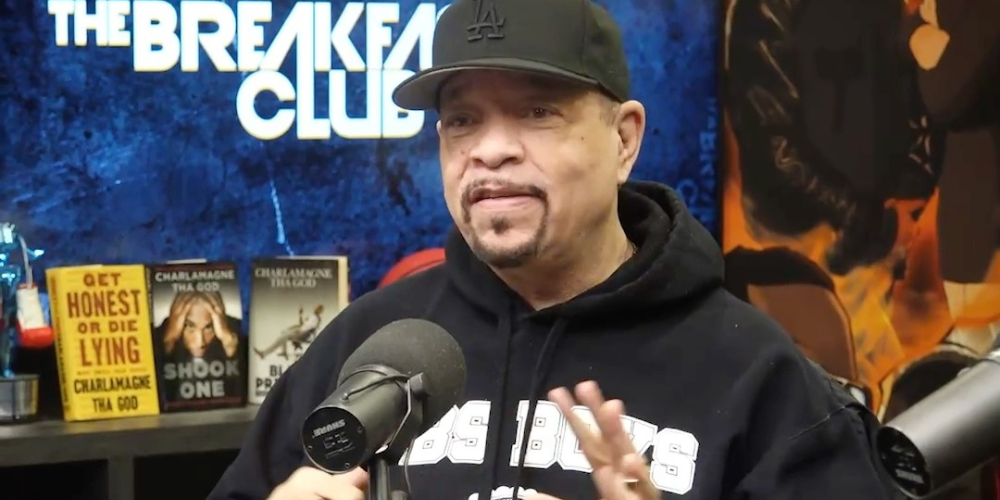
Hip-hop culture is full of phrases that move from street corners to everyday language, and few have traveled as far as “O.G.” One of the artists responsible for that shift is Ice-T, a foundational figure in rap whose influence stretches far beyond music.
As his fourth studio album approaches its 35th anniversary on May 14, the rapper and actor is looking back on how a local Los Angeles term became a global label—and why major stardom was never part of the original plan.
Early Days of a Rap Pioneer
Ice-T got his start in the late 1980s, at a time when hip-hop had not yet reached mainstream success. During a recent appearance on the Allison Interviews podcast, hosted by Allison Kugel, he spoke openly about how uncertain the future looked in those early years.
“There was no one big yet,” he explained. “Now, a kid can say, ‘I wanna be a rapper,’ because they can look at Drake and go, ‘Look at that.’ But who was I to look at? Grandmaster Flash and Furious Five were still struggling. Hip hop wasn’t big enough. We’re talking about 1982.”
That context shaped expectations. Even with confidence in his ability, Ice-T never assumed the genre—or his career—would reach massive audiences. His fourth album, released three projects into his career, arrived well after those uncertain beginnings and ended up changing the language of pop culture.
How “O.G.” Moved Beyond Los Angeles

Instagram | icet | Ice-T evolved "O.G." from a street-level acronym into a mainstream linguistic powerhouse.
The anniversary of that album opened the door to a deeper explanation of how the term “O.G.” spread beyond L.A. neighborhoods. According to Ice-T, the phrase carried layered meaning long before it appeared in music headlines.
“O.G. is a term used by the L.A. gangs for the first generation of a particular set,” he said. “But also in L.A., the term just means ‘The Original.’”
As media outlets searched for labels to define a new sound, the phrase found a wider audience. At first, journalists struggled to name the genre. Early descriptions leaned toward “Reality Rap,” a term Ice-T felt missed the mark.
“This is not everybody’s reality,” he noted. “This is just some particular kids’ reality.”
The shift came after Ice Cube’s breakout moment with “Straight Outta Compton.” When lyrics referenced a “gang,” the press drew conclusions that stuck.
“They said, ‘Oh, he referred to his rap group as a gang. They’re gangster rappers.’”
Claiming the “Original Gangster” Title
Once the media settled on “Gangster Rap,” Ice-T leaned into the label rather than resisting it. That decision helped cement “O.G.” as a defining term.
“That’s where the media gave us that name,” he said. “And I said, ‘Okay, if this is gangster rap, I’m the Original Gangster.’ I tagged myself on the tag they gave us, so I was, like, claiming my terrain.”
The phrase quickly traveled beyond music, showing up in movies, fashion, and everyday conversation. Even its creator didn’t expect that level of reach.
“I shoulda trademarked it,” Ice-T joked, later adding a quote from Rakim: “‘I’ll take a phrase that’s rarely heard, flip it; now it’s a daily word.’”
The observation speaks to hip-hop’s broader impact on language, with “O.G.” standing as one of its most lasting contributions.
A Career That Outpaced Expectations

Instagram | refresh.era | Ice-T's fourth studio album approaches its 35th anniversary on May 14.
Now 67, Ice-T looks at his career with a mix of pride and surprise. While confidence was always present, the scale of success—from music to acting—was never guaranteed. His reflections show how early hip-hop artists worked without clear roadmaps, building something new while the industry caught up.
That perspective also shapes how he views conflict within the genre today.
Ice-T on Rap Beef and Social Media
In a November 2024 interview with Boss Talk 101, Ice-T addressed how disputes in hip-hop have changed over time. While rivalries have long existed, modern platforms raise the stakes.
“The problem with beef is it can escalate away from you,” he said.
Social media, in particular, has altered how quickly situations spiral.
“Social media is an amplifier to everything,” he added. “It forces a reaction that really could be squashed so much simpler.”
Ice-T questioned why disagreements now play out online at all. “Why people would have a problem and take it to social media is beyond me,” he said, “especially if you know a n---a phone number.”
Thirty-five years after the release of his fourth album, Ice-T’s influence remains clear. “O.G.” is no longer limited to its Los Angeles roots or its original context. It now signals respect, history, and authenticity across generations.
What started as local slang, then a personal declaration, grew into a permanent part of pop culture—one that reflects both the roots of hip-hop and the unexpected paths carved by its earliest voices.